
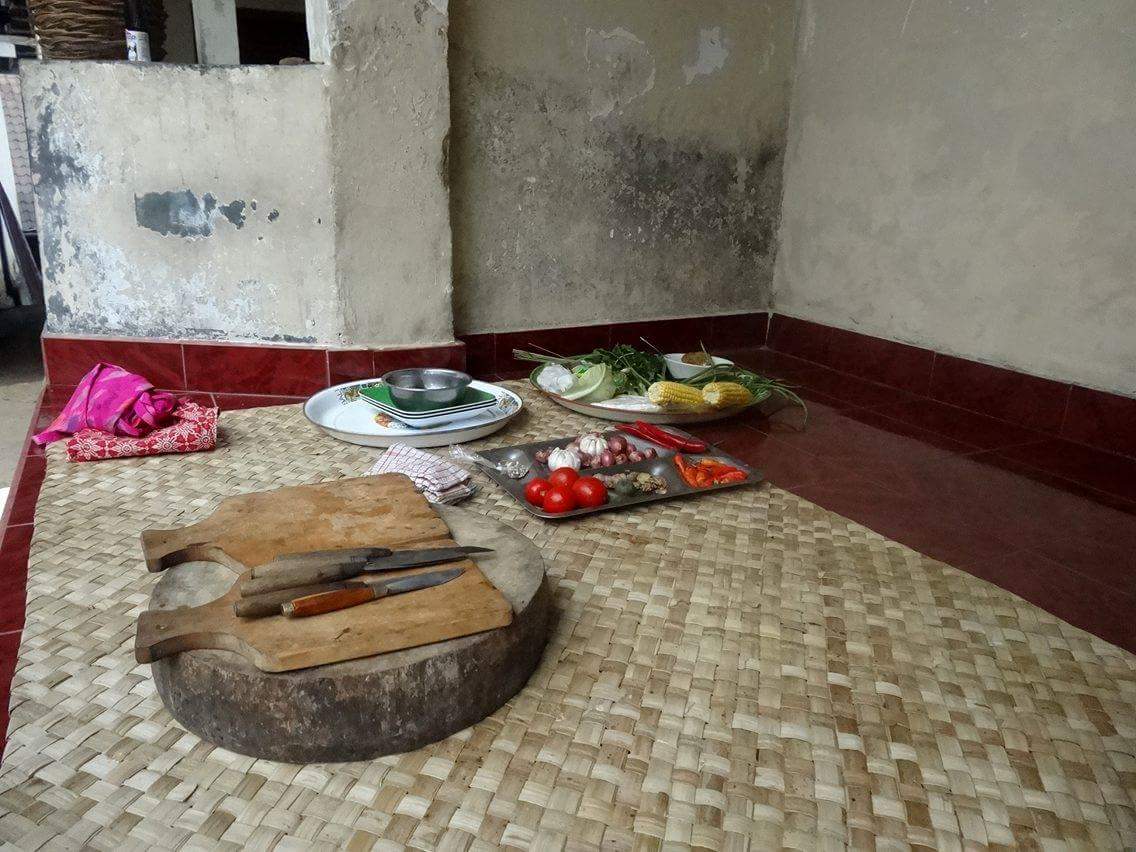
We all love the Indonesian cuisine and wanted to learn how to make some traditional dishes. There are plenty of cooking courses offered in Ubud and by accident, we came across a course offered by a local. We called and reserved for the next day.
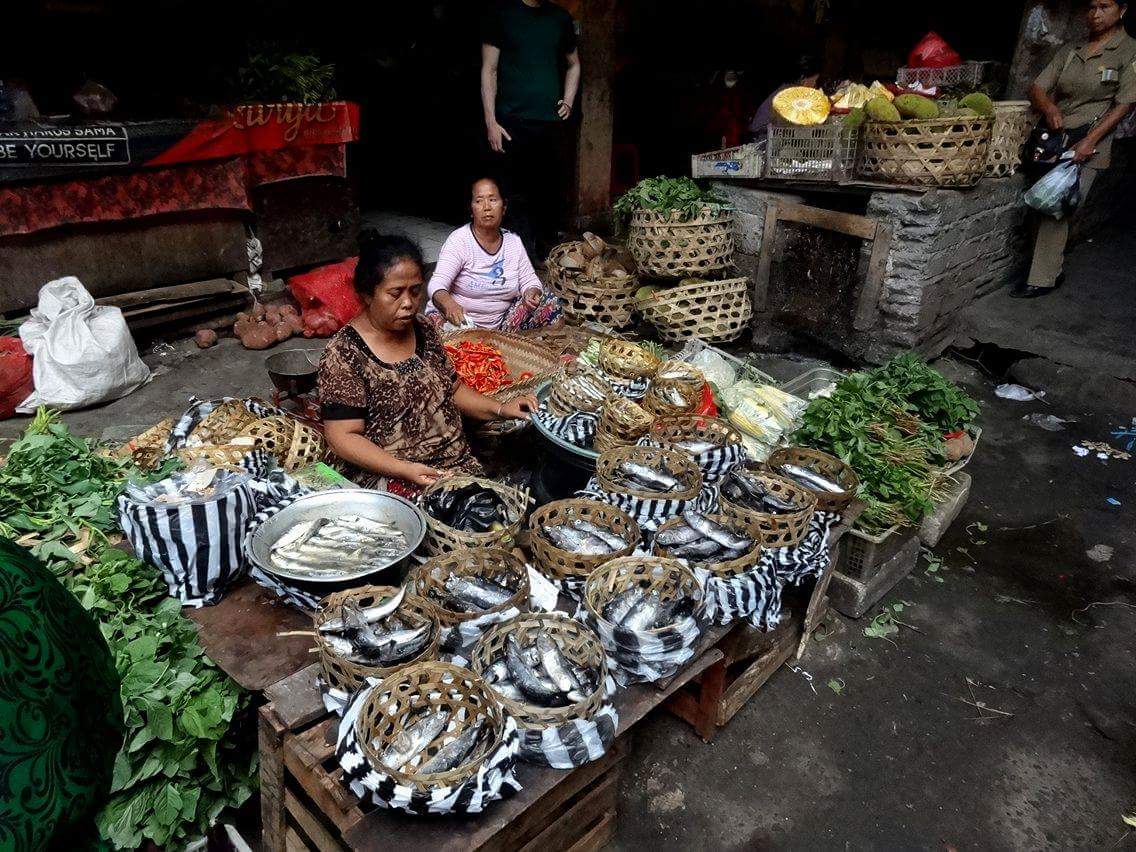
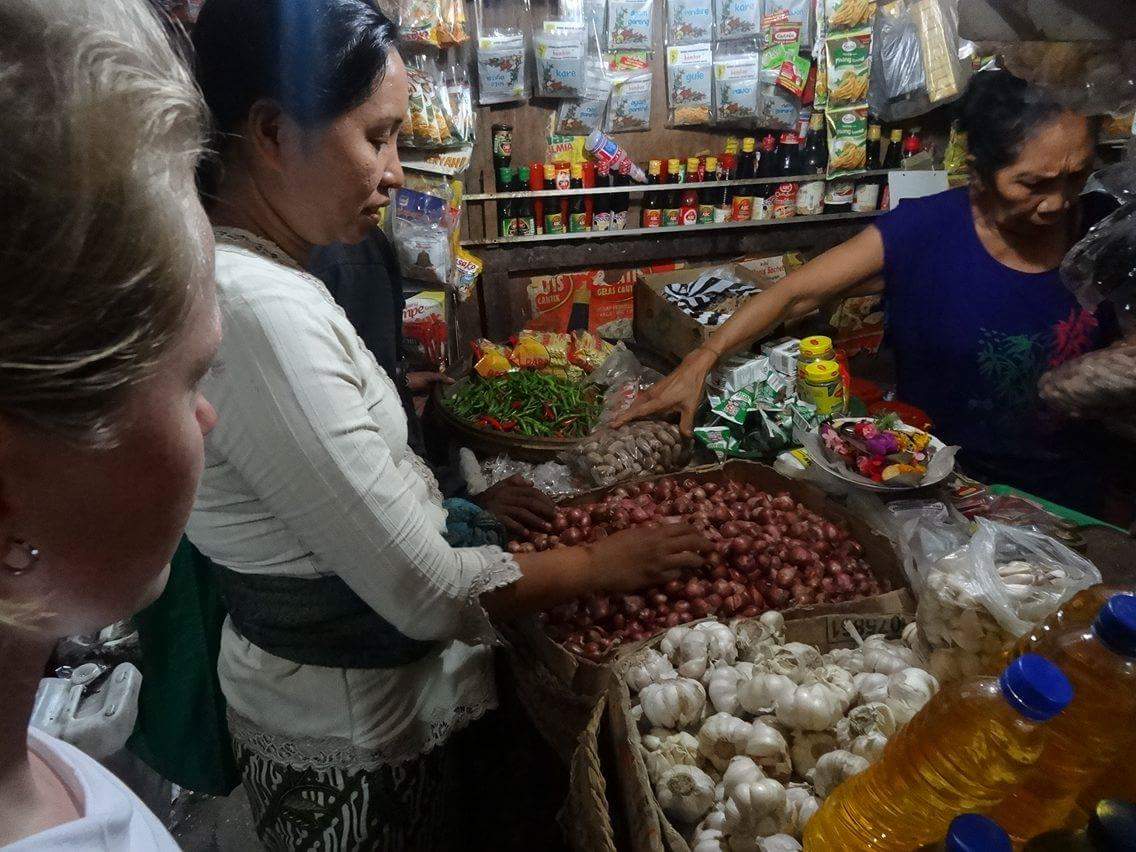
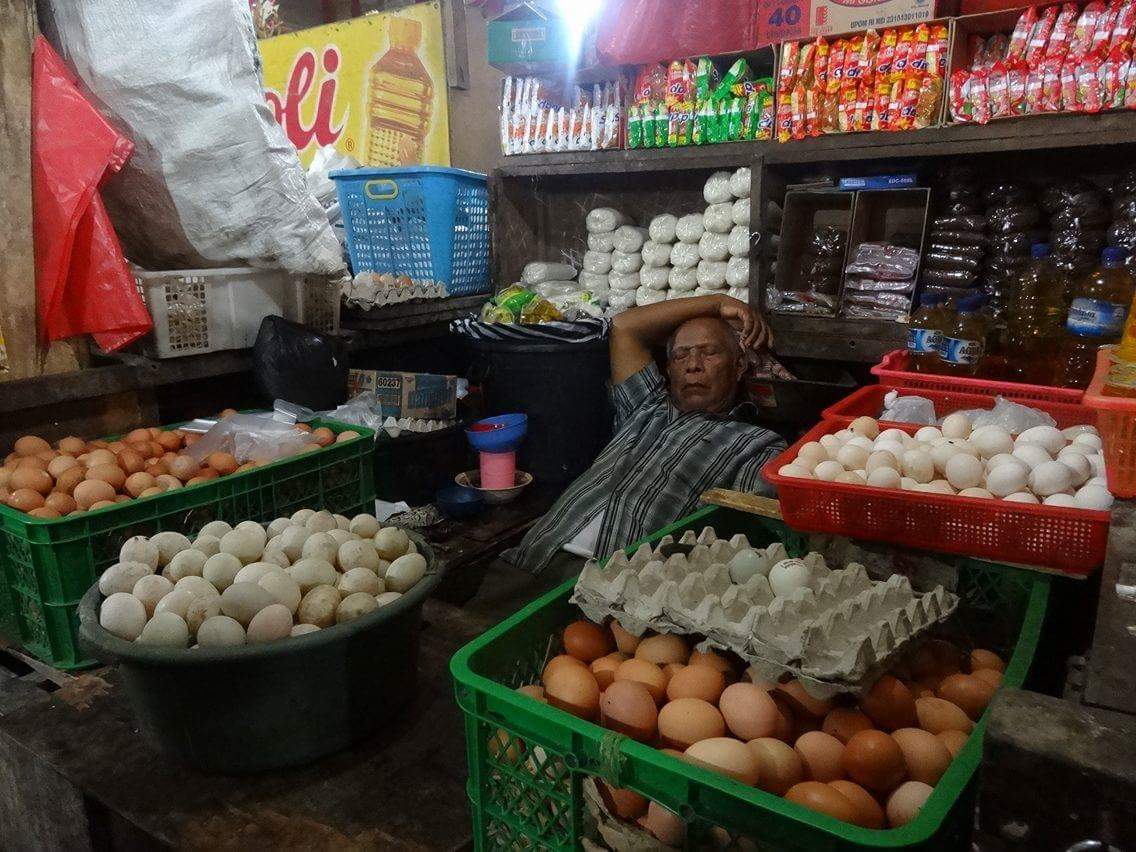
Dewa met us at 8 am in front of the Ubud Palace. From there, we went straight to the local market to buy fresh produce and spices to cook our dishes. We walked around the market and Dewa taught us about the most important veggies and spices used in the Balinese kitchen. Garlic, tumeric, and chilli are amongst the most important to make a delicious dish. After we got everything we needed, we headed to Dewa’s family home to cook.
Many locals live in a their own little “village”, where granparents, grandchildren, aunts, uncles, and cousins all live in one enclave, but in seperate houses and there is always a temple in the garden. If you think about it, it is a nice thing, there is always someone around to give you a hand and you are never alone.
We got started with the preperations. Spices were grounded up, then made into a paste, which were used as a base for just about every dish. So this makes it the most important part of cooking! Veggies were cut, washed, and blanched. And then we got started. Off to the stove top where we continued on to fry, stir, and add one ingredient after another to the wok.
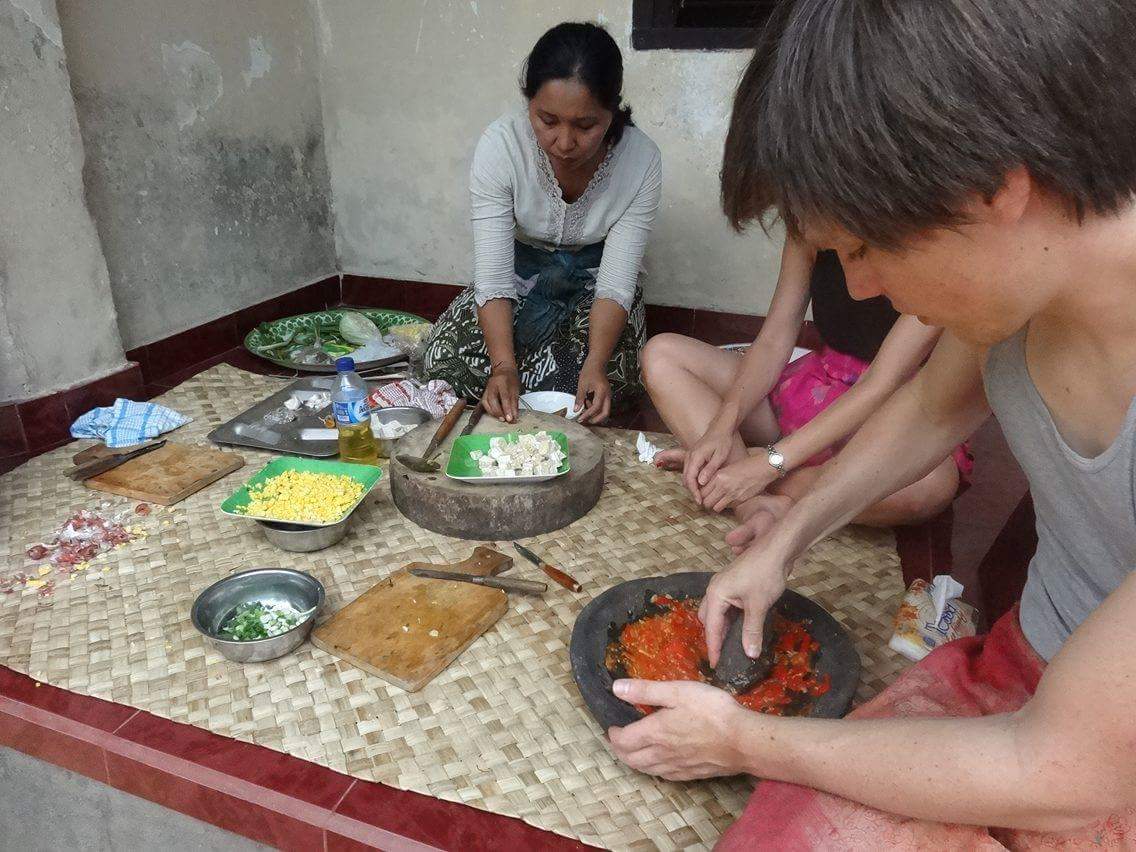
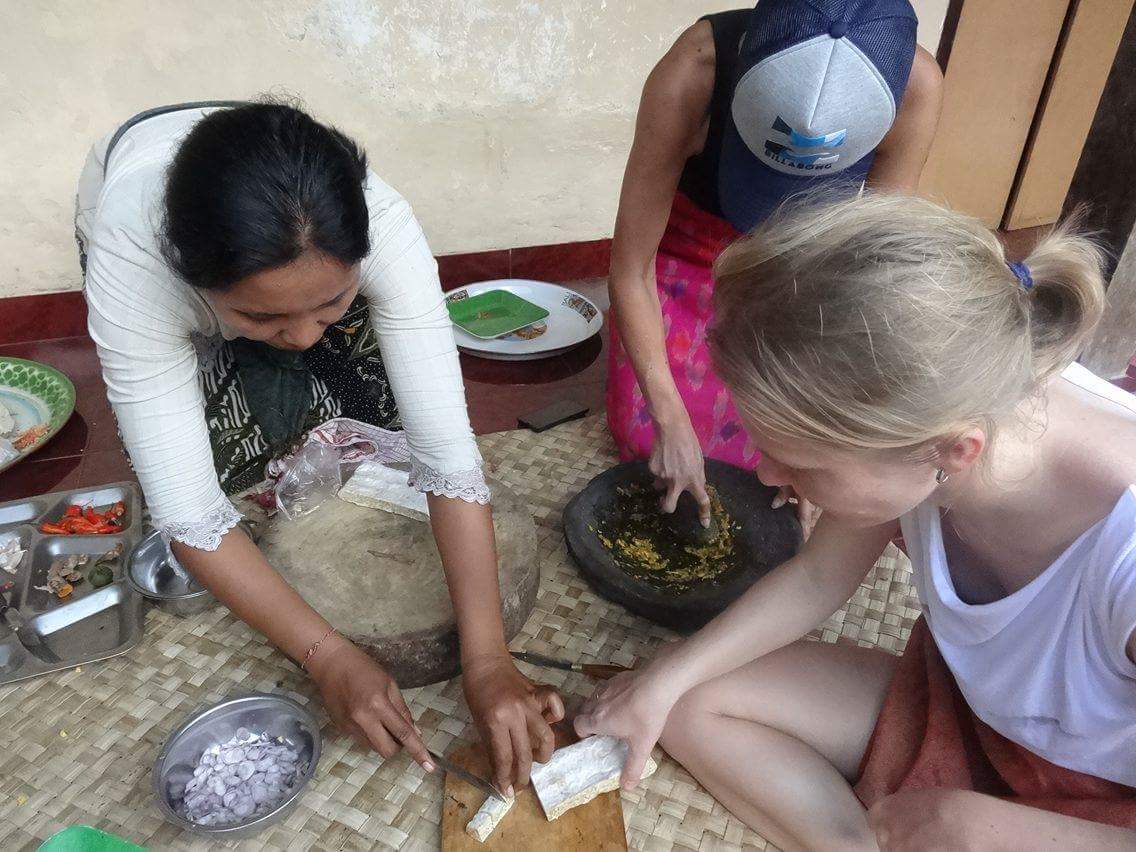
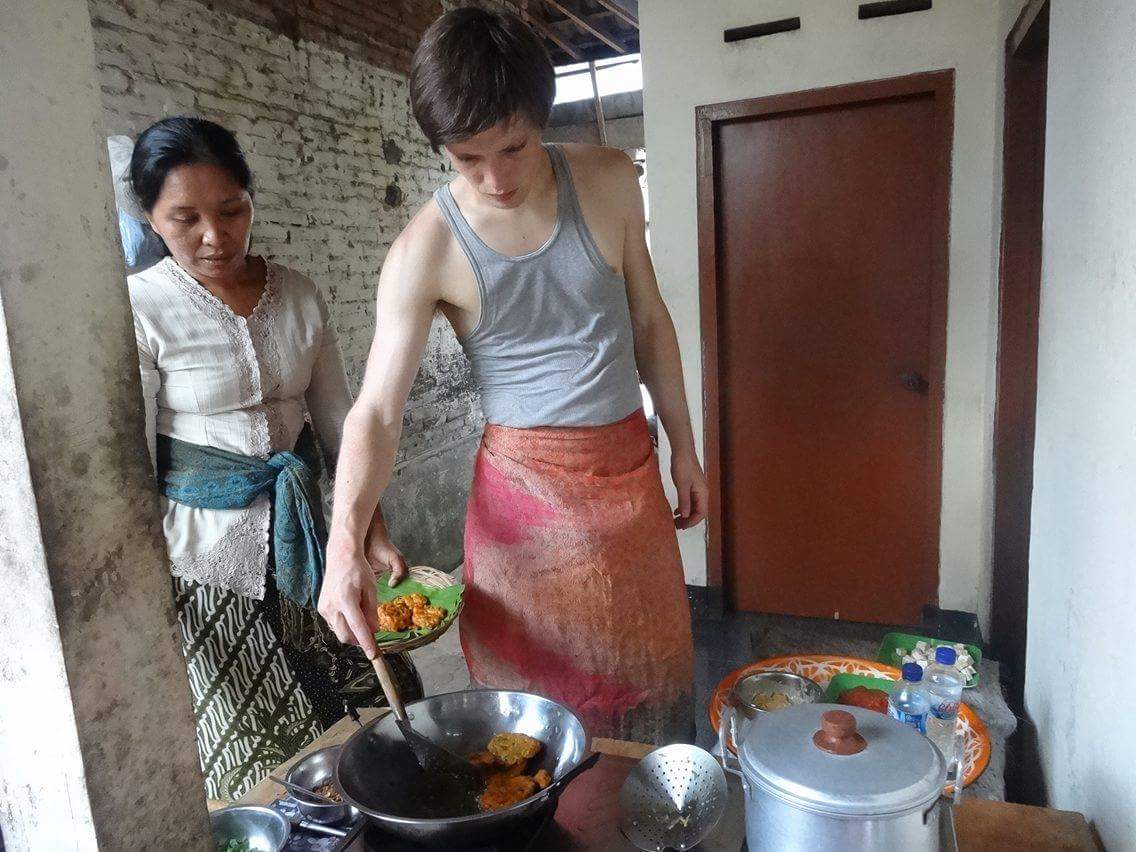
After laboring in the kitchen, we were rewarded with a variety of very delicious dishes and we ate until our bellies were content. Everything was delicious, and even more so because we prepared them ourselves, with the help of Dewa and her mother. 🙂
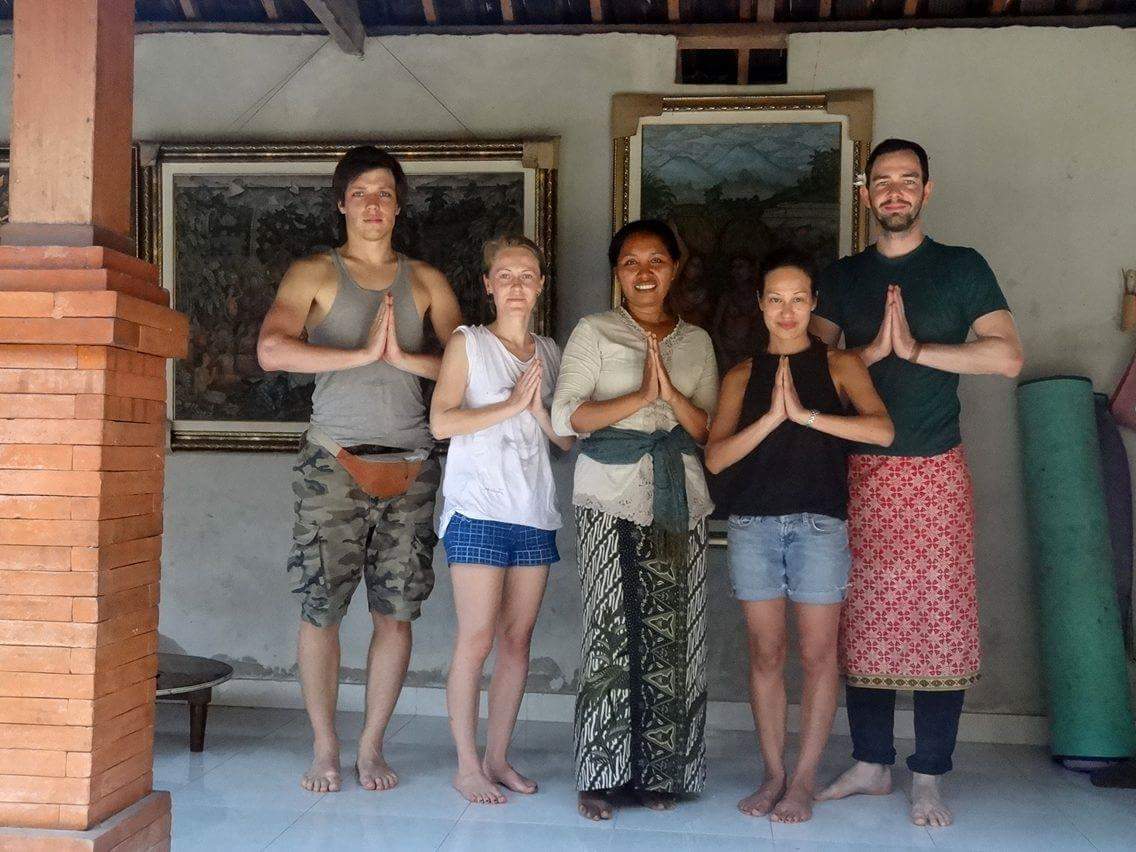
If you are looking to learn how to cook Balinese dishes, please give Dewa a call. We had a great time learning and cooking and eating. Dewa’s family were very welcoming and helpful. Price per person is 200,000 Indonesian Rupiah (IDR) and really worth every penny. Not only do you get to learn how to cook all of these wonderful and tasty dishes, you also get a glimpse of a local home and how they live!
Contact:
Dewa Putra
email: dadeputra@hotmail.com
Phone: 081999141957
If you can not go to Bali and try out a cooking course, here are 2 recipes for you to try out at home.
Tomato Sauce
4 small tomatoes
6 cloves of garlin
2 small chilli (the spicy kinds)
3 big chilli (not the spicy kinds)
Half of a small lime
Salt
Palm sugar
Wash all ingredients and peel the garlic.
Boil all for 5 minutes.
Drain the water, but save some for later, and throw all the ingredients into a mixer. Mix. Add a little bit of water and continue to add water until you get the consistency you want, it shouldd be like a tomato sauce you would use for spaghetti. Not too pasty, that comes later.
Add salt and sugar for taste. And finally the lime juice.
Then you fry everthing with coconut oil. Just enough to make the sauce a bit pastier.
This tomato sauce is the base for many Balinese dish, including for the next recipe. But you can also use it to make, for example, nasi goreng (fried rice).
Bakwan
2 stalks of corn, uncooked
100 grams of flour
1 egg
Parsley
Celery leaves
2 TBS tomato sauce (the one from above)
Using a sharp knife, shave off the corn from the stalk. Mash the corn using an ulekan or just a mixer if you don’t have an ulekan handy. Add 2 spoons of tomato sauce. Mix again.
I forgot to mention that you should chop the parsley and celery leaves.
Now add the rest of the ingredients, including the parsley and celery leaves, to your mixture and mix well. The mixture should be kind of runny, not too thick. If it looks like stew, add a little bit more flour. The mix shouldn’t look like cookie dough though. Somewhere between stew and muffin dough.
Once you have the right consistency, use a regular table spoon to scoop up a mixture and carefully drop it in your pan, which should already be medium hot with coconut oil. You should have enough coconut oil to barely cover the bakwan. Turn bakwan over when it is golden brown.
You can snack on these or eat with rice and kecap manis.
Drop me a line below if you try out these recipes and let me know how it turns out! Or if you have questions, feel free to ask. I can’t wait to try it out when I get back home.
Guten Appetit!
***Special thanks to Martita and Tobi for providing me with the Pics! ***
 moments to create